





Introduction
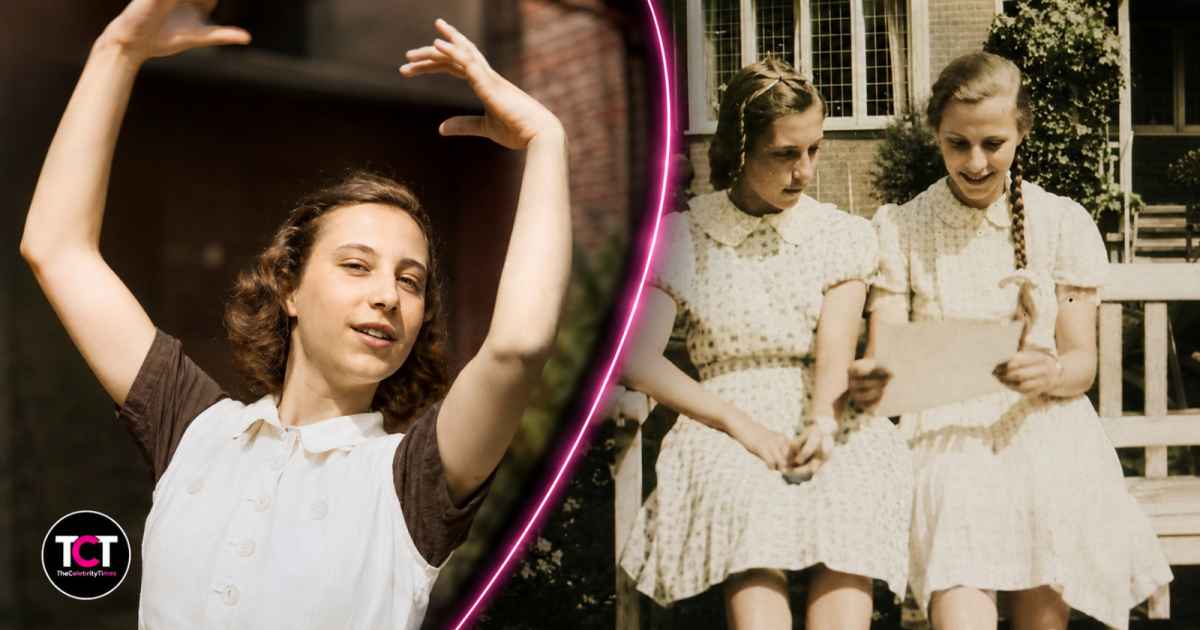
Helga Bejach’s story is one of the most compelling tales of compassion, resilience and humanitarian action from the Second World War. Her story continues to be a source of inspiration to historians, educators, students and refugee advocates worldwide in 2026. Helga is a young Jewish girl who escaped Nazi Germany via Kindertransport to find refuge and a loving family in Leicester, England.
Her experiences illustrate the immense tragedy of the Holocaust and show how people’s kindness can change lives. Today Helga’s diary, photographs, letters, and archival materials continue to be a cornerstone of the Holocaust remembrance and refugee education.
|
Detail |
Information |
|---|---|
|
Full Name |
Helga Bejach |
|
Famous As |
One of two German-Jewish orphan refugees adopted by the Attenborough family |
|
Birth Date |
Not publicly documented |
|
Arrival in UK |
August 1939, aged 9 |
|
Nationality |
German by birth |
|
Ethnicity |
German-Jewish |
|
Siblings |
Irene Bejach (sister, aged 10 in 1939) |
|
Adoptive Parents |
Frederick Attenborough and Mary Attenborough |
|
Adoptive Siblings |
Sir David Attenborough, Lord Richard Attenborough, John Attenborough |
|
Residence 1939-1946 |
College House, University of Leicester |
|
Left UK |
1946, moved to New York to join family |
|
Famous For |
Kindertransport survivor; Diary of Helga Bejach 1944-1946; Bejach archive loaned to University of Leicester in 2019 |
Who was Helga Bejach?
Helga Bejach was a German-Jewish child refugee who left Germany in August 1939, escaping its Nazi regime with her sister, Irene Bejach. Helga was nine years old when she came to Britain just weeks before the outbreak of WWII.
The sisters were introduced by the sisters of Barnard College to the home of Frederick Attenborough, Principal of University College Leicester, and his wife Mary Attenborough. The couple had three children who would go on to become popular names – Sir David Attenborough, Lord Richard Attenborough and John Attenborough.
Helga and Irene’s safe arrival in England was the result of deporting them from a regime that was systematically persecuting Jewish families throughout Europe. Unfortunately, as with many children brought up on Kindertransport, the sisters would never see their parents again. Their parents had planned their escape with the hope that they might survive the increasing perils of Nazi Germany.
The Bejach sisters were soon a part of the Attenborough family, and had a special connection that would forever affect both families.
The Kindertransport and the escape from Nazi Germany
One of the most important twentieth century refugee rescue missions was the Kindertransport. In 1938-1939 almost 10,000 Jewish children were brought to Britain to escape the Nazis in Germany, Austria, Czechoslovakia and other countries under Nazi Germany.
Helga and Irene were two of these children.
With the growing severity of the antisemitic legislation and the escalating violence and discrimination towards the Jewish communities, many parents were forced to leave their children behind. Kindertransport was a means of hope, but there was a price to be paid: separation from families, often for good.
The trip was the salvation and the loss for the Bejach sisters. They survived without facing persecution, but they lost their parents, relatives, friends, language and homeland.
They come to Leicester to highlight the significance of communities’ help in times of emergencies. Had it not been for the hospitality and generosity of the Attenboroughs and others like them, many refugee children would have had an uncertain future.
Helga’s experience is now a recurring theme in refugee protection, child displacement and humanitarian responsibility discussions.
Living at the Attenborough House at College
College House, on the campus of the current University of Leicester, was the home of the Attenborough family. This became the home where Helga and Irene started to rebuild their lives during the war years.
It was not an easy time of WWII to live through in Britain. Everyone experienced air raids, rationing, uncertainty and wartime restrictions. However, for the two sisters, College House provided stability, security and a sense of belonging.
Mary Attenborough was a significant character in their lives. She was passionate about the plight of refugees and had a strong faith in action. Helga and Irene were welcomed by the family because of her humanitarian values.
The sisters lived with David, Richard and John Attenborough for seven years. The children shared the daily life, education and experiences of the family. This setting enabled the sisters to heal from trauma, as well as to settle into a new country and culture.
The relationship was important throughout their lives and other members of the Attenborough family later expressed fondness for their ‘adopted sisters’, appreciating the significance of those years spent together.
Following this, Helga Bejach writes her Diary and the Leicester Archive
The personal diary is one of the most valuable of the historical records associated with Helga Bejach.
Helga kept a diary from 1944-1946 which documents different aspects of her life during and after the war. This diary has been used as a valuable primary source document for the study of the refugee experience, wartime childhood and Holocaust history.
The diary is kept in the University of Leicester Special Collections and Archive. It is covered in the photograph from Accession 2019/20 and the archive includes materials dated from 1944-1946.
A previously unshown collection of family photographs, letters, and documents related to Helga were loaned to the university in 2019. With the help of Richard Graves, biographer of Mary Attenborough, the archive was made available.
The collection offers unique glimpses of:
| Archiving of material | Historical significance |
|---|---|
| Helga’s diary | first-hand of the war time. |
| Visual record of refugee life | family photos |
| Letters and documents | Evidence of family separation and adaptation |
| Attenborough links | Documentation of humanitarian action. |
The diary has been preserved for future generations by holding the rights to it, Beverly Rich and the University of Leicester Archives and Special Collections.
The University of Sanctuary is part of the Attenborough Legacy
The University of Sanctuary is part of the Attenborough Legacy.
The values of the University of Leicester today are very closely linked to the story of Helga Bejach.
The University is a registered University of Sanctuary and offers educational, financial and community-based support to asylum seekers and refugees.
The Attenborough family “lived our values of what it means to be a Citizen of Change” says Professor Nishan Canagarajah, President and Vice-Chancellor of the University of Leicester.
He highlighted the importance of sacrifice, kindness and duty which are being exemplared by Frederick and Mary Attenborough and are still part of the mission of the institution.
The university considers the Bejach sisters’ story to be more than just a historical moment; it’s a model for the power of education and compassion to change lives. Helga’s involvement in history, contemporary and historical, renders the story particularly resonant in today’s world, which continues to grapple with refugee crises and displacement.
After the war, what happened to Helga Bejach?
Helga and Irene were with the Attenborough family for 7 years, before leaving Leicester in 1946.
The sisters relocated to New York where they also joined the other family members who survived. Their leaving represented the end of a great chapter in the lives of the Bejach and Attenborough families.
Much of Helga’s life after this was private but her experiences during the war came to the public’s attention due to the Attenborough’s fame. Later, both Sir David Attenborough and Lord Richard Attenborough remembered their close friendship with Helga and Irene during their childhoods.
They frequently saw their parents as being generous and kind and concerned about humanity and found that to be a moral influence on their own lives and careers.
The Bejach sisters’ story was an everlasting reminder that compassion can impact future generations in a way that goes beyond a single moment.
Why Helga Bejach’s Story is Still Relevant in 2026
Helga Bejach’s story is a very topical one more than eighty years after her arrival in Britain.
Education and Remembrance of the Holocaust
Her experience is taught in schools, universities and museums across the world. Her personal story enables students to learn about history from the personal human point of view.
Refugee and Asylum Discussions
Refugee issues of today tend to include reference to historical stories such as that of the Bejach sisters. They have survived because of the life changing power of receiving the children and families who are vulnerable.
The use of family and social history research
The application of family and social history research.
The Bejach archive is studied by historians to learn about the experiences of British families with the refugee children, the emotional toll of family separation and the role of women like Mary Attenborough in wartime relief.
Individual Person has the power to change the world
The most salient point is that significant historical transformation sometimes starts with individual choices. Because the Attenboroughs didn’t seek fame or recognition. They did things because they felt it was the right thing to do to help others.
Their example remains a source of inspiration for those who are still suffering from humanitarian crises today.
A trip to the Helga Bejach Collection and Lasting Legacy
The Special Collections of the University of Leicester are open for research, educational and student use in relation to Helga Bejach. The Diary of Helga Bejach, photographs, letters and related materials are contained in the collection, both in digital and physical formats.
The resources offer rich primary source material for the study of the World War II, Holocaust history, refugee experiences, and British social history. They are also a reminder that all historical events are simply narratives of real persons and real decisions.
Helga Bejach was much more than a footnote in the history of the Attenborough family. She is a symbol of thousands of Jewish children who, on the courage of strangers willing to offer them a safe haven, survived. Her voice continues to educate and inspire in 2026 and beyond, via her diary, archive, and years at College House.
Conclusion
Helga Bejach’s story is a testament to the indomitable human spirit, the survival of refugees, and the healing power of compassion. She was saved by the Kindertransport and taken to the safe hands of Frederick and Mary Attenborough, in one of the darkest times in history. The preservation of her diary, family archive, and relation to the Attenborough family continue to enhance Holocaust education and refugee studies. Helga’s journey is a profound reminder of the power of kindness, sacrifice, and duty, and it continues to inspire hope for generations to come as the University of Leicester strives to uphold the values of sanctuary and inclusion.
FAQs
1. Who was Helga Bejach?
Helga Bejach was a German-Jewish child refugee who made it to safety from Nazi Germany via the Kindertransport program and was adopted by the Attenborough family in Leicester in 1939.
2. Helga Bejach was related to David Attenborough?
During and after World War II Helga spent seven years living in a house with the Attenborough family, including with their brothers, David Attenborough.
3. What is the Kindertransport?
The Kindertransport was a rescue program that transported almost 10,000 Jewish children from Nazi controlled Europe to safety in Britain prior to WWII.
4. Where is Helga Bejach’s diary now?
Her diary has been kept in the University of Leicester Special Collections and Archive, and forms part of the Bejach archive collection.
6. What is the significance of Helga Bejach’s story in 2026?
Her story is used to educate people on the Holocaust, refugee protection, humanitarian action and the need to provide sanctuary for those who need it.